Hair styling tools: beauty allies… or invisible enemies?



Every day, our hair is exposed to the heat of hairdriers, straighteners and curling irons.
The result: hair that looks smooth, shiny and manageable… on the surface. But deep within the hair shaft, damage can build up silently.
An in-depth look at the damage caused by heat and solutions to protect and repair your hair effectively.
Even when used at a medium heat setting, a hairdryer can:
Each application of heat causes:
At first, the signs are subtle: hair that is slightly duller and harder to detangle. Then, over the weeks, the hair shaft becomes more porous and coarse, and the ends split.
It is the cumulative effect that is the problem: it is not occasional use, but daily repetition that gradually weakens the hair’s internal structure.
Straighteners and curling irons can reach temperatures of 180 to 230°C. At these temperatures:
Above 150°C, damage can become irreversible without suitable protection.
Under the effect of heat:
1. The cuticle scales open: The cuticle scales lift up instead of remaining flat against the hair shaft. The hair then becomes more vulnerable: it loses moisture more easily, becomes more prone to tangling, and appears duller and more prone to frizz.
2. Moisture escapes: The water naturally present in the hair evaporates. The hair fibre gradually dehydrates, loses its suppleness and becomes drier, stiffer and more prone to breakage.
3. Proteins become weakened: The hair’s proteins, particularly keratin, become weakened. Their internal structure breaks down, which weakens the fibre, reduces its elasticity and makes it more susceptible to breakage.
4. The hair fibre loses its cohesion: The internal components of the hair are no longer firmly bound together. Its structure becomes less compact and less resilient, making it more fragile, more brittle and harder to manage.
Results: dry, brittle, frizzy hair that loses its shine and elasticity.
4.1 What is a Botox hair treatment?
Contrary to what its name might suggest, hair Botox does not contain botulinum toxin. It is a deep-repair treatment designed to repair and regenerate hair that has been weakened by heat, colouring or repeated damage. Its formula, rich in targeted active ingredients, works deep within the hair fibre to restore body, suppleness and shine.
It generally contains: Amino acids, Keratin, Collagen, Hyaluronic acid, Nourishing oils.
These ingredients help to strengthen the internal structure, smooth the cuticle and intensely rehydrate the hair fibre.
Its benefits:
It is an ideal treatment to use as a course of care following a period of intensive use of heat styling tools.
4.2 Hair Botox: professional treatment or at-home routine?
A hair botox treatment can be carried out at the hairdresser’s or at home, but the results and intensity are not quite the same.
In the salon, the professional treatment is more concentrated and more technical. The hairdresser tailors the formula to the condition of your hair, applies the treatment strand by strand and often uses heat to maximise the penetration of the active ingredients. The result: a deeper, longer-lasting effect (often 4 to 8 weeks depending on aftercare).
At home, there are versions designed for the general public, which are generally slightly less concentrated. They help to nourish and smooth the hair fibre, add shine and maintain the results of a salon treatment. Ideal for regular maintenance or as a more accessible alternative.
In summary: the salon offers a more powerful and long-lasting effect, whilst home treatments allow for maintenance and gradual repair.
5.1 The mechanisms of action of the heat-protective spray
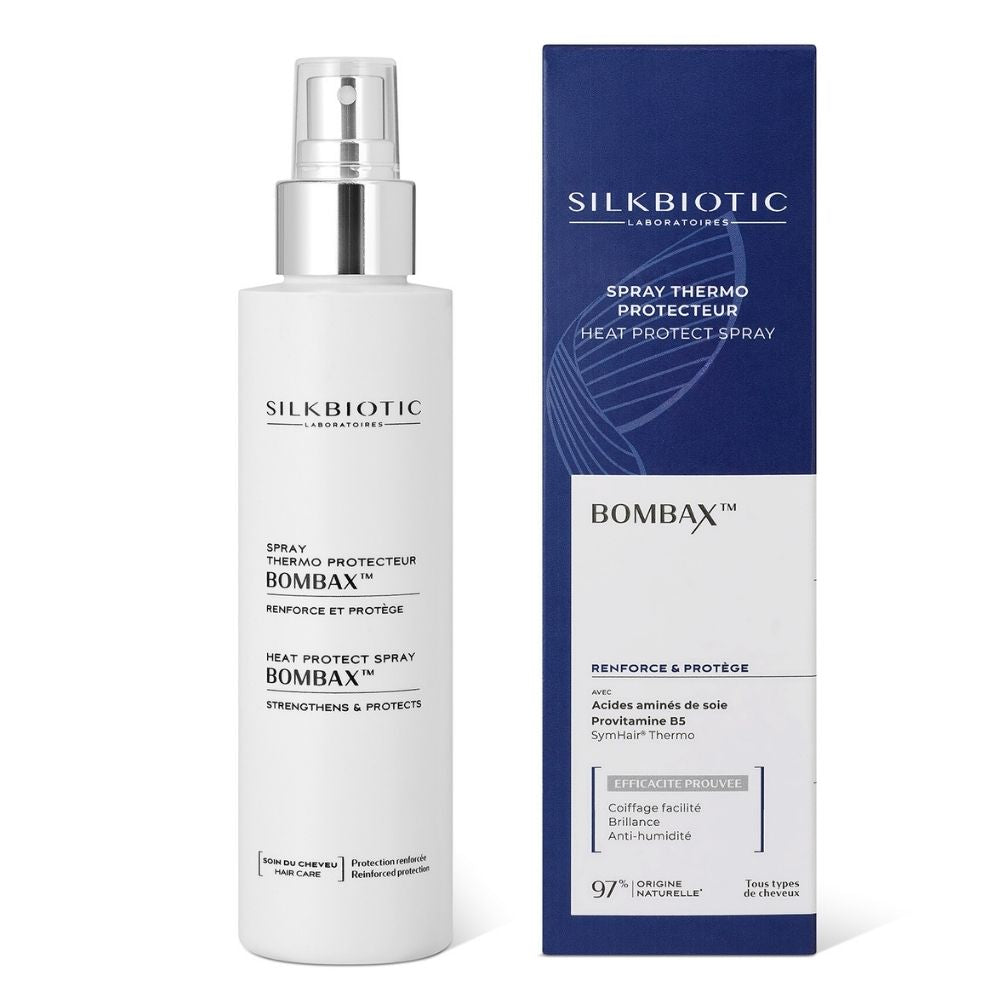
The heat-protectant spray acts as an invisible protective film that coats each hair fibre. Once applied, it deposits a thin layer of coating and protective active ingredients that limit direct contact between heat and the hair’s keratin.
It helps to:
Without protection, heat strikes the hair fibre directly. With a heat protectant, the hair is coated and better protected. The hair shaft is thus less damaged, retains its suppleness better and remains shinier and more resilient with repeated styling.
5.2 How can you tell if a heat-protectant spray is good?
Here’s how to spot a good heat-protectant spray to effectively shield your hair from heat styling tools.
What makes a good heat-protectant spray:
Effective heat protection up to high temperatures: check that it provides protection up to 200°C or higher, especially if you straighten or curl your hair frequently.
Moisturising and strengthening ingredients: active ingredients such as panthenol (pro-vitamin B5), amino acids, or natural oils (argan, coconut) help maintain the hair’s moisture and strength.
Light, non-greasy protective film: it should form a barrier without weighing the hair down or leaving visible residue.
Suitable for your hair type: for fine hair, opt for a light spray; thick or dry hair may benefit from richer formulas.
Easy and even application: a mist or spray allows for even distribution before drying or styling.
Hair styling tools aren’t your enemies… provided you use them wisely.
Heat without protection = cumulative damage. Heat + protection + repairing treatments = controlled styling without compromising the health of your hair.
The ideal approach: prevention + repair
To keep your hair strong and shiny:
- Always apply a heat-protectant spray before using any heat
- Avoid maximum temperatures
- Space out the use of heated styling tools
- Treat your hair with a Botox-style hair treatment as a repair regimen
Your hair can be beautiful and strong. You just need to give it the right protection.


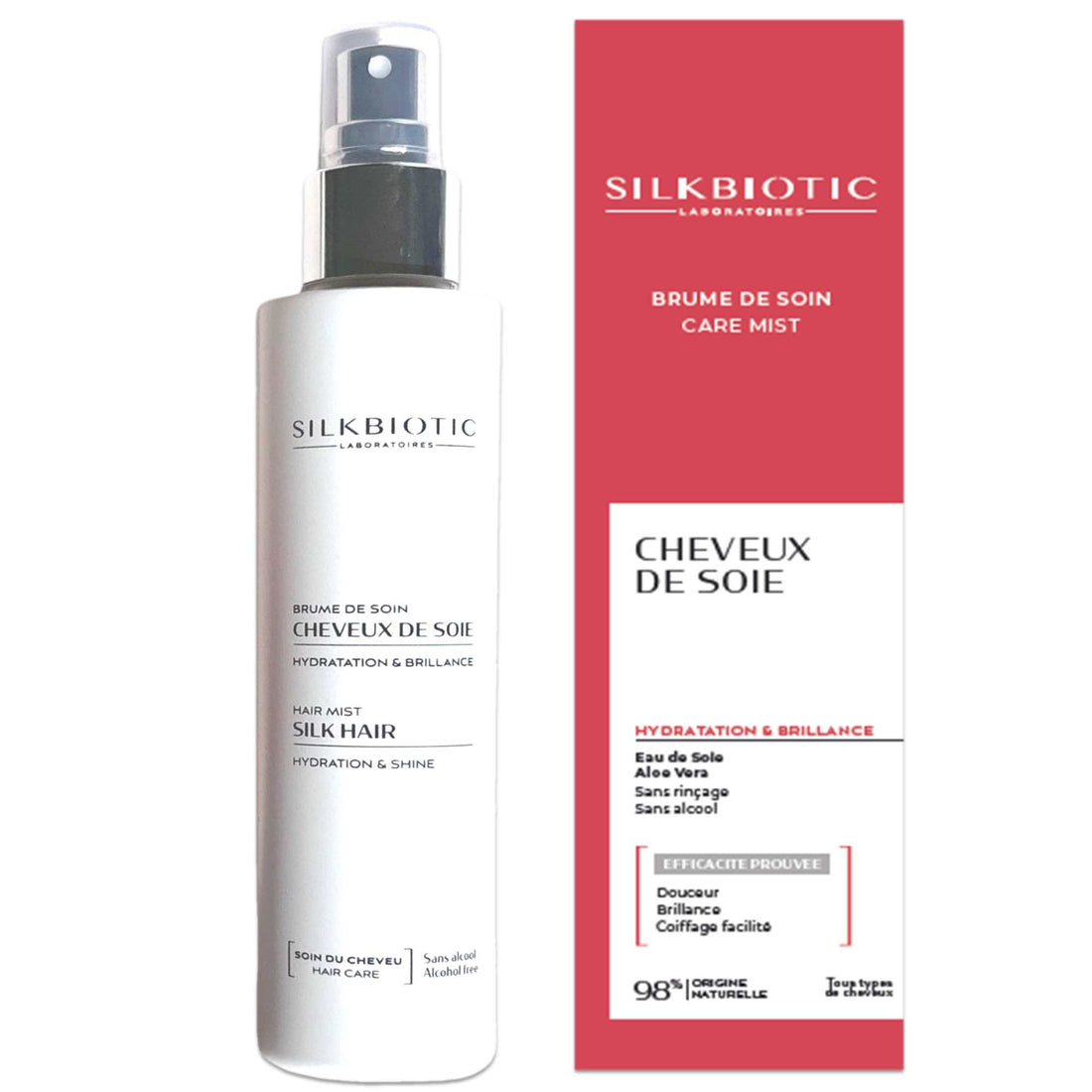

Static electricity in hair: why does it happen and how can you get rid of it?
Why are some hair types more prone to static electricity than others?
Hair: structure and ethnic characteristics
The scalp contains around 120,000 hairs, or between 250 and 300 hairs per square centimetre. Each hair has a lifespan of around four years, after which it falls out and is replaced by a new one.

Dry hair: how should you look after it?
Our hair, whatever its length or type, is precious to us. It reflects who we are and expresses our personal style and identity. But that’s not all…


